




Formula 1 has reported a strong recovery in revenue during the third quarter of 2026, offsetting much of the financial impact of cancelled races and changes to the championship calendar. Despite staging fewer grands prix than in 2025, the sport’s overall revenue has remained broadly stable, supported by growing sponsorship, hospitality and commercial income.
Formula 1 Revenue Reaches $2.496 Billion Despite Calendar Disruption
Formula 1’s parent company, Liberty Media, confirmed in its latest financial results that the championship generated $2.496 billion (£1.9 billion approximately) in revenue during the nine months ending 30 September 2026.
The figure represents a decline of just $2 million compared with the equivalent period in 2025, despite two fewer races taking place.
The recovery follows a difficult second quarter, when the cancellation of the Bahrain and Saudi Arabian Grands Prix contributed to a 38% year-on-year fall in revenue for the three months ending 30 June.
However, third-quarter revenue increased by 28% to $1.115 billion, helped by an additional race taking place during the period compared with 2025.
Formula 1’s operating income rose from $433 million to $450 million over the first nine months of the year. Adjusted operating income before depreciation and amortisation (OIBDA), meanwhile, declined by 5% to $649 million.
F1 Maintains Plans for 23-Race Season Amid Middle East Uncertainty
Formula 1 chief executive Stefano Domenicali said the championship still expects to complete 23 races in 2026, one fewer than the previous season.
The ongoing conflict in the Middle East has created uncertainty surrounding the Qatar and Abu Dhabi Grands Prix, although organisers remain committed to completing the scheduled events.
“I’m proud to say that we again demonstrated F1’s ability to solve challenges by successfully staging the Bahrain Grand Prix in Malaysia, and the event was a resounding success, reflecting the resilience of our business model and the incredible ability of our teams and partners to find creative solutions to ensure we can go racing,” said Domenicali during the Q3 earnings call.
He emphasised that the disruption would not affect Formula 1’s longer-term commercial ambitions in the region.
“I’d also note that the disruption we experienced in the Middle East this year does not change our long-term regional strategy and ongoing partnership with our promoters. This year we currently remain scheduled to complete our calendar this season and at this stage continue to plan to finish the season in Qatar and Abu Dhabi.”
Sponsorship and Hospitality Growth Strengthen F1 Finances
Although race-related revenue declined following the cancellations, increased sponsorship and hospitality income helped offset the losses.
“Every race this season has sold out, with more than half setting attendance records and our digital impressions and audiences continue to grow,” said Domenicali.
Formula 1 is considering expanding its premium Paddock Club hospitality facilities at several circuits, including Silverstone, Shanghai and Austria.
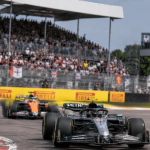
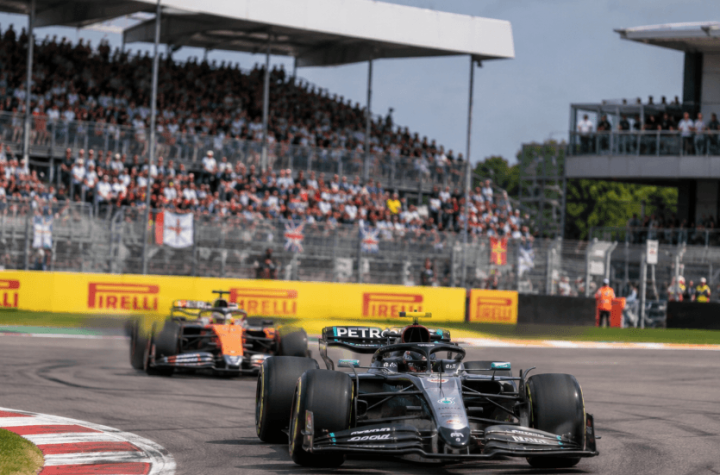
The British Grand Prix at Silverstone remains an important part of the championship’s hospitality and commercial offering.
Domenicali added: “Season to date through Austin, we have welcomed 5.8 million fans and had 18 consecutive sold-out events, with 11 races setting new attendance records. Audiences are up, our social channels continue to grow, and the feedback from our fans in our surveys has been overwhelmingly positive.”
Operating Costs Continue to Affect Profitability
Lower expenditure associated with activities at the Formula 1-owned Grand Prix Plaza in Las Vegas helped improve financial performance.
However, increased FIA fees, freight expenses, administrative costs and investment in information technology placed additional pressure on earnings.
Higher personnel costs were also identified as a contributing factor.
Formula 1 Targets Expansion in Africa and New Commercial Markets
Formula 1 has continued pursuing international growth despite the disruption to its 2026 calendar.
Recent announcements include a 2027 calendar featuring 10 sprint races, plans for an African Grand Prix in Rwanda during the 2030s, and an F1 Live season-launch event in Milan in February 2027.
Domenicali highlighted Africa as an increasingly important market.
“Africa is estimated to be home to more than 100 million Formula 1 fans already, with almost 60% of fans in key sub-Saharan markets under the age of 35. So the long-term growth opportunities here are enormous,” said Domenicali.
Commercial agreements involving Liqui Moly, Standard Chartered, Disney and Mattel have also contributed to revenue growth, alongside Formula 1’s retail outlets and branded experiences.
F1 Digital Audience Reaches 129 Million Social Media Followers
Formula 1’s digital expansion remains another significant driver of its commercial performance.
Its combined social media following reached 129 million, representing annual growth of 16%.
YouTube views exceeded 1.7 billion, an increase of 30% year on year. Race highlights accounted for 217 million views, up 25% compared with 2025.
Outlook for Formula 1’s Financial Performance
Formula 1’s latest results demonstrate its ability to withstand disruption to the racing calendar while maintaining commercial growth.
With sponsorship, hospitality and digital engagement continuing to expand, the championship enters the final months of 2026 with revenue largely matching last year’s performance, despite the cancellation of major events.

Graham Greene is a contributor to Dealmakerz, covering news, politics, business, technology, sport, entertainment, and lifestyle. He focuses on clear, accurate reporting and useful information that helps readers stay informed about current affairs and developments that matter to them. His work highlights relevant stories, emerging trends, and key issues, presenting them in a balanced, accessible, and reader-friendly way.


More Stories
Barnsley FC v Leeds United U21s player ratings as Whites edge seven-goal EFL Trophy thriller
England wear black mourning kit for 'Svennis' at Wembley
Argentina fight in vain – one goal is enough for England | Sports