





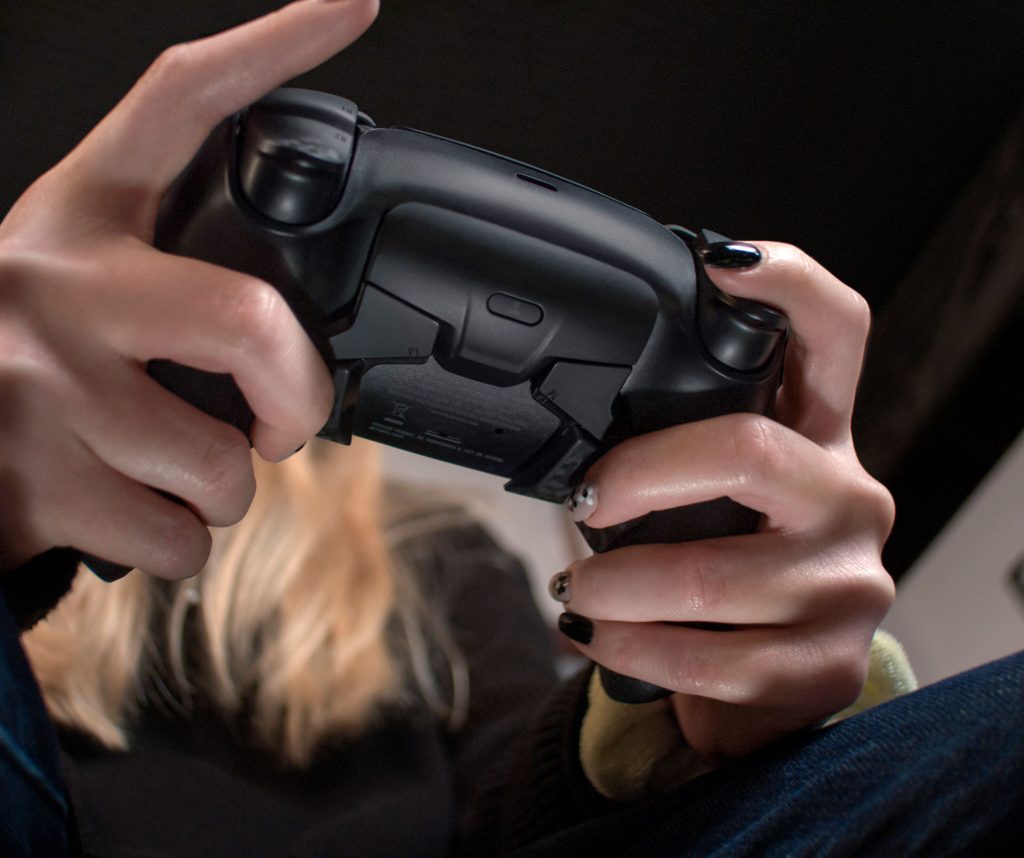
One of the saddest things about Playstation 5 is that the console only supports the new Dualsense controller, which means that expensive third-party PS4 controls don’t work with PS5 titles. This also means that previously there were no controls that gave players extra buttons and other drawbacks, which were introduced in controls from Scuf, Razer, and Astro. Now, however, controls from third-party manufacturers with more buttons are starting to appear, and Scuf is first on the ball with its new Reflex series.
The Scuf Reflex series comes with a number of improvements over the standard Dualsense controller that can be really interesting for gamers in a competitive environment. Among other things, the controls come with four additional buttons on the back that players can map to the standard buttons of the control, the ability to save three different button profiles, an improved design of the levers, replaceable levers of different lengths, and the ability to change the microphone via the button on the control element.
Control comes in three different forms depending on what players are looking for. All variants come with the improvements mentioned above, but the Pro and FPS versions come with a slightly more rubberized sleeve for better grip, and the FPS version also offers instant triggers, allowing for quicker activation of the play buttons.
The Scuf Reflex, Reflex Pro and Reflex FPS will go on sale next year for 200, 220 and 270 euros, respectively.

Graham Greene is a contributor to Dealmakerz, covering news, politics, business, technology, sport, entertainment, and lifestyle. He focuses on clear, accurate reporting and useful information that helps readers stay informed about current affairs and developments that matter to them. His work highlights relevant stories, emerging trends, and key issues, presenting them in a balanced, accessible, and reader-friendly way.




More Stories
Google Rolls Out Gemini 4 Argon With Smarter Reasoning and Less Wordy AI Responses
Microsoft Urges Entra ID Admins to Move Users to Passkeys Before SMS Sign-In Retirement
Polish Developer Builds App That Detects Nearby Meta Smart Glasses