




Google has entered the growing market for screenless fitness wearables with the launch of the Fitbit Air, a lightweight health tracker designed around AI-driven coaching and long-term wellness monitoring. Positioned as a direct rival to devices such as the Whoop band, the Fitbit Air combines minimalist hardware with Google’s expanding AI ecosystem through the new Google Health platform.
The result is a device that feels less like a traditional smartwatch and more like a personal health companion built for users who prioritise sleep, recovery and fitness insights over notifications and displays.
A Screenless Fitness Tracker Focused on Simplicity
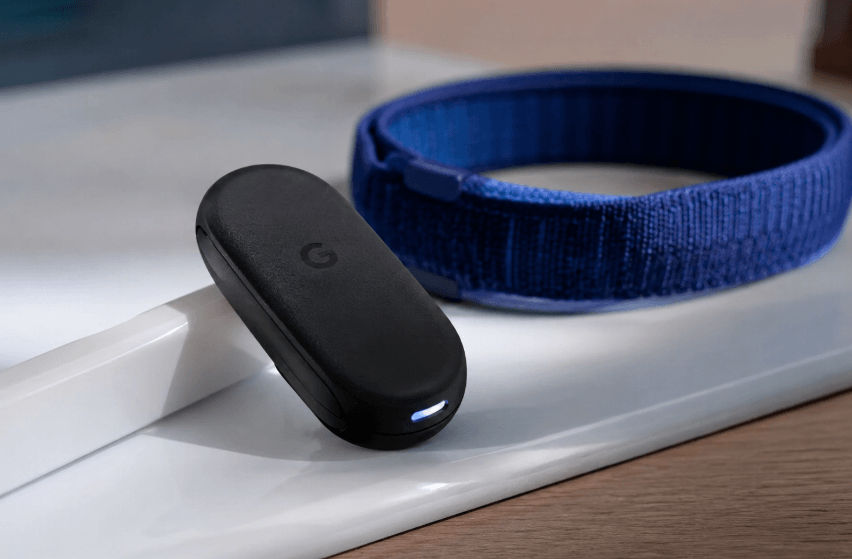
At first glance, the Fitbit Air resembles a stripped-back version of Fitbit’s Inspire range. The tracker itself is a compact pill-shaped module that can be swapped between different straps, similar to Whoop’s modular approach.
Weighing just 5.2 grams without a band, the Air is notably lightweight and discreet. Google offers several interchangeable bands, including a soft “performance loop” option intended for all-day wear and overnight sleep tracking.
Unlike smartwatches or fitness bands with touchscreens, the Fitbit Air has no display at all. Interaction is limited to tapping the device twice to check battery status or dismiss alarms. The emphasis instead is on passive data collection and analysis through the companion Google Health app.
For users accustomed to checking the time or monitoring live workout metrics on their wrist, the absence of a screen may feel limiting. However, for those seeking a distraction-free tracker focused purely on health insights, the minimalist design is likely to appeal.
Battery Life and Charging Performance
Google claims the Fitbit Air can last roughly seven days on a single charge, which aligns with early real-world usage.
That battery life is respectable, though it falls short of competitors such as Whoop, which advertises up to two weeks of usage. Given the Fitbit Air lacks a screen, some users may expect longer endurance.
Where Google does impress is charging speed. Even a short few-minute top-up appears sufficient to restore a meaningful amount of battery life. This quick-charge capability helps offset the shorter runtime and makes the tracker easier to maintain during busy routines.
Google Health App Becomes the Core Experience
The Fitbit Air is deeply tied to Google Health, the company’s new unified wellness platform that is gradually replacing both Fitbit and Google Fit apps.
The redesigned interface places greater emphasis on summaries, readiness scores and AI-generated insights. Information is presented in swipeable panels that highlight metrics such as sleep quality, cardio load, heart rate and activity levels.
The layout feels cleaner and more modern than older Fitbit software, while remaining relatively easy to navigate. Fitness and sleep sections provide more detailed breakdowns, including workout histories and sleep-stage analysis.
For UK users increasingly interested in preventative health and fitness monitoring, the app’s simplified dashboard may prove appealing compared with more data-heavy alternatives.
Gemini AI Coach Takes Centre Stage
The standout feature of the Fitbit Air is Google’s Gemini-powered AI Coach.
Integrated throughout the Google Health app, the Coach functions as a conversational wellness assistant capable of analysing workouts, logging meals and providing contextual health summaries.
The AI can interpret natural language requests, making tasks such as recording meals significantly easier. For example, users can ask it to log “the same cereal and milk as yesterday” or upload a photograph of a nutrition label for automatic tracking.
The system also provides commentary on workouts and recovery. During testing, the AI warned about overexertion following a poor night’s sleep and a demanding HIIT session, generating feedback that felt surprisingly human in tone.
In some cases, the responses bordered on humorous, with the app seemingly “telling off” users for pushing themselves too hard.
AI Features Are Impressive — But Not Perfect
Despite its strengths, the AI Coach still shows clear signs of immaturity.
There were instances where workout summaries became confused, incorrectly identifying activities or generating awkward headlines such as “Adjusted that session for you” even when no changes had been made.
Speech-to-text functionality also appeared inconsistent during early testing, occasionally interrupting or overwriting dictated input.
Like many generative AI systems, the Coach can sometimes produce repetitive or overly formulaic responses. It also occasionally triggered unexplained safety warnings during otherwise ordinary conversations.
Still, Google appears aware of many of these issues and has reportedly been rolling out fixes quickly.
Google’s Approach to Health and AI Safety
Google says the AI Coach was developed alongside medical and nutrition specialists and tested against higher-risk health scenarios to reduce harmful or misleading advice.
The company stresses that the Coach is not intended to replace medical professionals. Instead, it acts more as a wellness guide focused on fitness, recovery and lifestyle habits.
In practice, the AI generally avoids crossing into medical diagnosis territory. When asked about serious conditions such as Guillain-Barré syndrome, it provided general information and emotional support rather than direct medical recommendations.
However, some interactions around body image and nutrition may still raise concerns for vulnerable users, particularly those with histories of disordered eating.
Fitbit Air vs Whoop: Which Is Better?
Google’s clearest competitor is Whoop, whose subscription-based fitness bands have become popular among athletes, executives and wellness enthusiasts.
Whoop arguably still offers deeper performance analytics and more mature recovery insights. However, its ongoing subscription fees remain a major barrier for many consumers.
The Fitbit Air takes a different approach. The hardware costs around $100 upfront, while most core Google Health features — including AI Coach functionality — are available without a mandatory subscription. A Premium tier unlocks additional features for around $10 per month.
For UK buyers weighing long-term value, that pricing structure could make Fitbit Air considerably more attractive.
Verdict: A Promising New Direction for Fitbit
The Fitbit Air represents a significant shift for Google and Fitbit, moving away from conventional fitness trackers toward AI-driven health coaching.
Its lightweight hardware, strong app experience and conversational AI features make it one of the more interesting wearable launches of the year. Although the software still feels slightly rough around the edges, the overall experience shows considerable promise.
For users who want comprehensive health insights without the distraction of a smartwatch display — and without committing to expensive subscription fees — the Fitbit Air could emerge as one of the strongest alternatives to Whoop currently available.

Graham Greene is a contributor to Dealmakerz, covering news, politics, business, technology, sport, entertainment, and lifestyle. He focuses on clear, accurate reporting and useful information that helps readers stay informed about current affairs and developments that matter to them. His work highlights relevant stories, emerging trends, and key issues, presenting them in a balanced, accessible, and reader-friendly way.



More Stories
Google Rolls Out Gemini 4 Argon With Smarter Reasoning and Less Wordy AI Responses
Microsoft Urges Entra ID Admins to Move Users to Passkeys Before SMS Sign-In Retirement
Polish Developer Builds App That Detects Nearby Meta Smart Glasses