





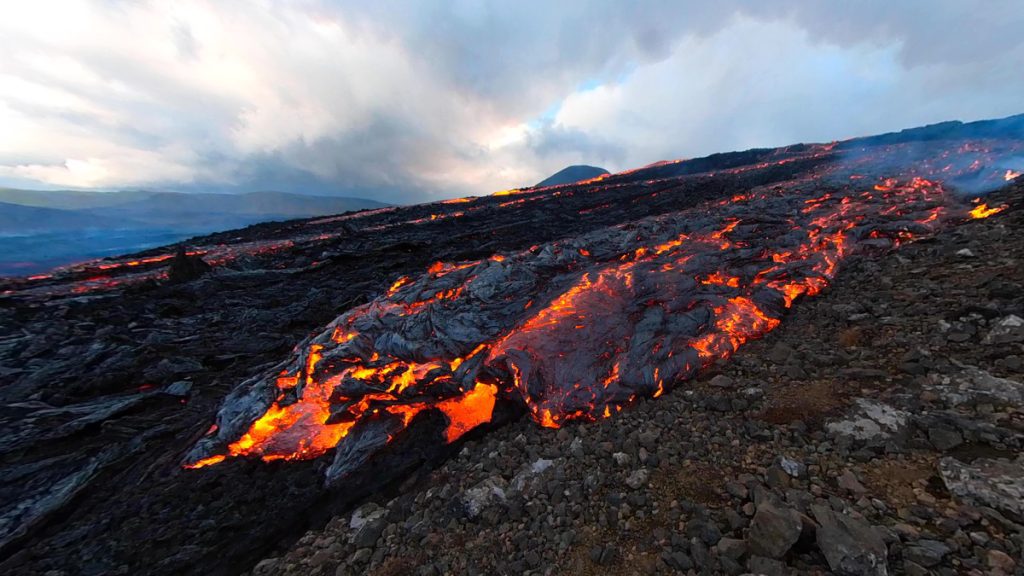
For six months in 2021, the Fagradalsfjäll volcano in Iceland erupted. Every week, scientists collected samples of lava and volcano smoke.
It was a unique opportunity for us to be able to follow the volcanic eruption in real time, says researcher Martin Whitehouse at the National Museum of Natural History. At the beginning of the eruption, we saw surface magma, but the longer the volcano was, the more magma came from the really great depths.
Lava from great depths under the earth’s surface
Measurements showed that the magma came from more than 20 kilometers below the surface.
During a volcanic eruption, soft, hot lava rushes upward from filled magma chambers beneath the Earth’s crust. In molten magma, rocks with different chemical contents depending on the depth at which they form, are formed at different high pressures and temperatures. This allows researchers, by examining the chemical composition of the lava, to determine how magma moves under the Earth’s crust during the eruption.
Daytime fresh lava shows origin of magma
In the NordSIMS laboratory at the National Museum of Natural History, samples from fresh lava were examined for chemical content. The composition of the elements, isotopes, rock types, and crystal forms is what scientists need to determine if lava originates from magma found in reservoirs that are surface or deep under the Earth’s crust.
Researchers use measuring equipment near the Fagradalsfjäll volcano. Photo: National Museum of Natural History
– We usually examine rocks and minerals that are millions of years old at NordSIMS’s lab, but this fresh, diurnal lava was the youngest we’ve ever measured, says Martin Whitehouse.
Knowledge of magma movements under the Earth’s crust is needed to better understand what happens when a volcano erupts. The researchers were also able to compare their results with seismic measurements and ground changes to improve models that predict volcanic eruptions.
Scientific material:
Rapid transformation of a deep magmatic source at Fagradalsfjall volcano in Icelandtempered nature.
Contact:
Martin Whitehouse, Researcher at the National Museum of Natural History, [email protected]

Graham Greene is a contributor to Dealmakerz, covering news, politics, business, technology, sport, entertainment, and lifestyle. He focuses on clear, accurate reporting and useful information that helps readers stay informed about current affairs and developments that matter to them. His work highlights relevant stories, emerging trends, and key issues, presenting them in a balanced, accessible, and reader-friendly way.




More Stories
Google Rolls Out Gemini 4 Argon With Smarter Reasoning and Less Wordy AI Responses
Microsoft Urges Entra ID Admins to Move Users to Passkeys Before SMS Sign-In Retirement
Polish Developer Builds App That Detects Nearby Meta Smart Glasses